Updated October 21, 2026 · US grocery budgeting guide
Saving money on groceries doesn’t have to mean collecting coupons, chasing every sale or eating boring meals. One of the simplest approaches is to stop buying food you already have—and actually use what you’ve paid for.
If you keep buying duplicate pantry staples, find wilted produce in the back of the fridge or end up ordering takeout despite a full kitchen, this guide gives you 12 realistic habits to try.
See what you already own.
Choose meals around it.
Purchase only the missing quantities.
Get the Free Pantry Inventory Printable →
Why less waste can beat a bigger discount
Buying a discounted item that spoils before you eat it doesn’t help your budget. The EPA’s household food-waste guidance advises planning around food you already have and buying only amounts you expect to use. You don’t need an exact savings claim to see the logic: a $4 vegetable you eat costs less than a $3 vegetable you throw away.
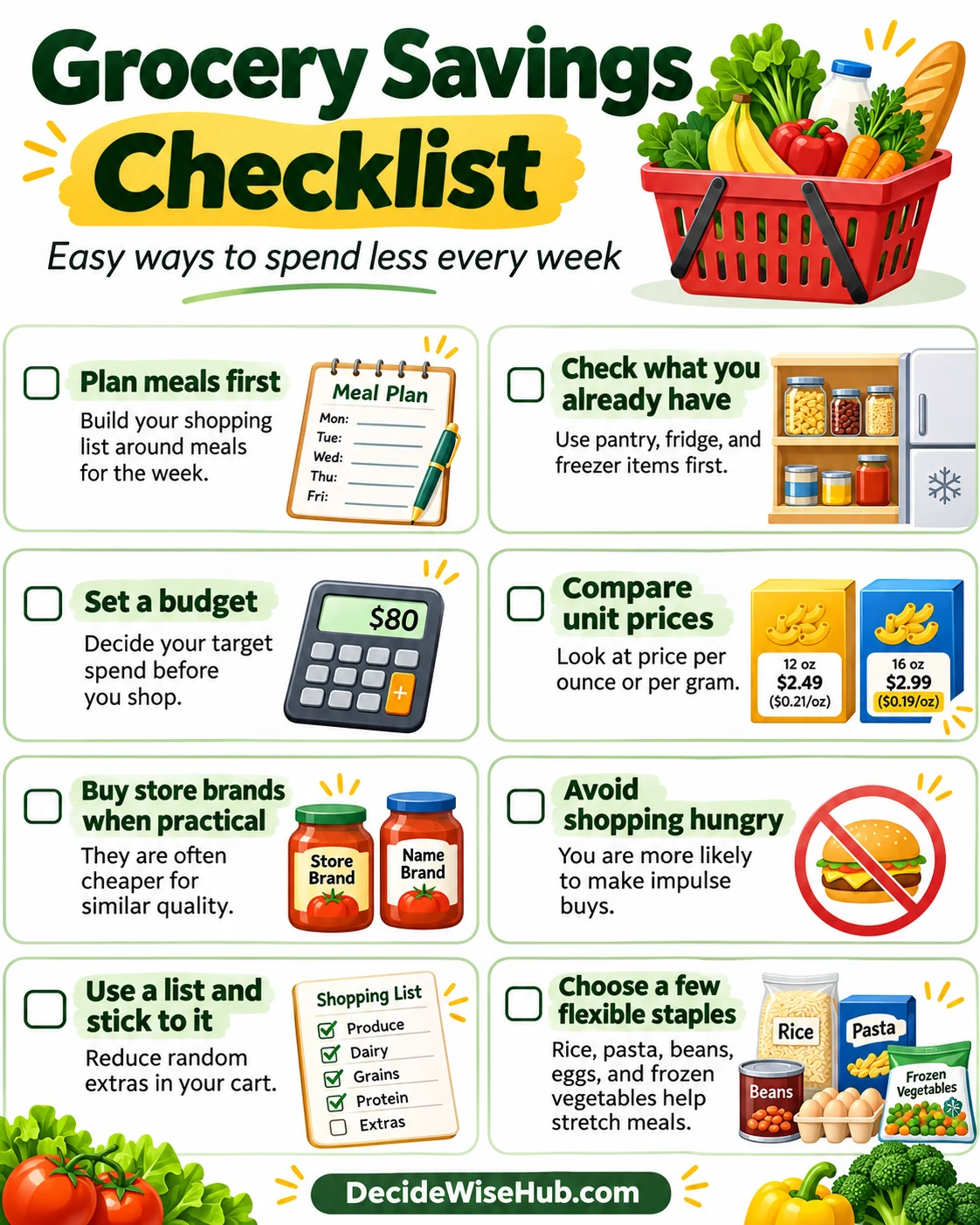
12 ways to save money on groceries without coupons
1. Shop your kitchen before you shop the store
Take three minutes to scan the fridge, freezer and pantry. Write down vegetables, proteins and open packages to use first. Check quantities so you don’t buy a third jar of something you already have.
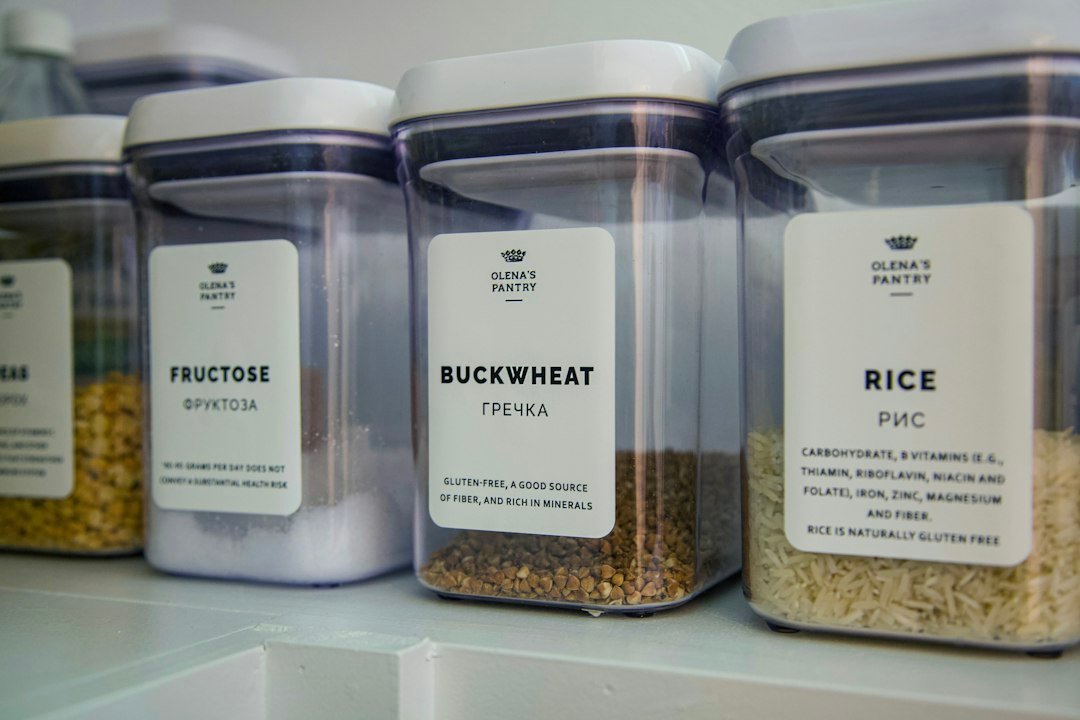
2. Create a simple pantry inventory
Use four columns: item, quantity, storage location and use-by reminder. Update only when you shop or finish something—an overly elaborate system is harder to maintain.
3. Plan three meals from ingredients you own
Start with rice, pasta, beans, eggs or frozen vegetables already on hand. Add only missing ingredients to your list. Example: use leftover rice and vegetables for fried rice, then remaining vegetables in a soup.
4. Write a needs-only shopping list
Instead of listing whole recipes, subtract what you already own. Note quantities: ‘two tomatoes’ is more useful than ‘vegetables.’
5. Build one flexible leftover night
Leave one dinner unplanned each week for safe leftovers or a freezer meal. This avoids buying ingredients for seven elaborate dinners when life changes.
6. Use first-in, first-out storage
Place older safely stored groceries in front and newer ones behind. Label leftovers with preparation dates. Never rely on appearance alone to decide whether perishable food is safe.
7. Compare unit prices, not package sizes
Check price per ounce, pound or serving. A bigger package isn’t a bargain if some goes unused.
8. Buy bulk only for foods you will finish
Bulk rice or dried beans can make sense if storage is appropriate. Giant packs of fresh salad can cost more per eaten portion after spoilage.
9. Keep two inexpensive backup meals
For example, shelf-stable pasta and canned tomatoes, or beans and rice with frozen vegetables. They’re useful when the alternative would be expensive takeout.
10. Freeze extra portions promptly
Portion meals into shallow containers and refrigerate or freeze promptly. Label contents and dates. Follow USDA guidance for cooling, storage and reheating.
11. Plan produce in order of perishability
Use delicate greens and berries earlier, and save more durable produce for later. Choose frozen versions if you regularly discard fresh food.
12. Review what you threw out
Each week note three wasted items and why: overbought, forgotten or not enjoyed. Adjust the next shopping list accordingly, without guilt or complicated tracking.
Example: Turn a nearly full pantry into three dinners
| Already have | Dinner idea | Buy only if needed |
|---|---|---|
| Rice + frozen vegetables + eggs | Vegetable fried rice | Seasoning |
| Pasta + canned tomatoes | Simple tomato pasta | Optional fresh greens |
| Beans + remaining vegetables | Bean and vegetable soup | Broth if not on hand |
These are illustrative combinations, not a priced meal plan. Adjust for dietary needs, household size and food safety.
A realistic seven-day pantry-first challenge
- Day 1: Inventory your fridge, freezer and pantry.
- Day 2: Identify five foods you want to use soon.
- Day 3: Cook one meal primarily from existing ingredients.
- Day 4: Label and organise safely stored leftovers.
- Day 5: Compare the unit prices of two staple purchases.
- Day 6: Make a list of only ingredients you still need.
- Day 7: Review what you used and what still went to waste.
Free printable pantry inventory checklist
A simple pantry inventory list works better than an elaborate system you’ll abandon. Use our printable with columns for item, quantity, storage location and which ingredients need attention. Open the free pantry inventory printable here, then print it or save it as a PDF.
Food safety: saving money should never mean keeping unsafe food
The USDA recommends refrigerating most cooked leftovers within two hours (within one hour if temperatures are above 90°F), using refrigerated leftovers within 3–4 days, and reheating them to 165°F. Freezing food before it spoils can help, but the freezer doesn’t make previously unsafe food safe.
See USDA leftover safety guidance and FoodSafety.gov storage charts.
Frequently asked questions
How can I save money on groceries without coupons?
Start by checking your existing food, planning meals around what you already own, buying only missing ingredients, comparing unit prices and reducing wasted food. These habits work without loyalty apps or clipped coupons.
How do I stop buying duplicate groceries?
Keep a short pantry inventory on your phone or fridge. Check it before shopping and note quantities, especially for frequently duplicated staples like pasta, sauces and canned goods.
What’s the best way to track pantry inventory?
A paper checklist is enough for many people. If you regularly shop for a large household, a basic spreadsheet with item, quantity, location and date can work. Choose the lowest-effort system you’ll actually update.
Can I cut grocery spending without eating less?
Often you can reduce avoidable spending by using food that would otherwise spoil and avoiding duplicates. Results depend on your budget, household and current habits; savings aren’t guaranteed.
What groceries should I buy in bulk?
Buy larger amounts only when the unit price is lower, you have suitable storage, and you are confident you’ll use the food. Perishable items bought in bulk can be more expensive if wasted.
Final thoughts
Start with just one habit this week: shop your kitchen before shopping the store. It takes very little time and can make your next grocery list more deliberate. Build on it with a pantry inventory and simple meal plan as the habit becomes easier.
Download Your Free Pantry Inventory Checklist →
Sources
- EPA: Preventing Wasted Food at Home
- USDA: Leftovers and Food Safety
- FoodSafety.gov: Cold Food Storage Chart
DecideWiseHub is an independent informational site. No savings amount is guaranteed. Some links may be updated as offers change.